Showing posts with label Updates. Show all posts

Monday, 9 June 2014

As long as I work, so long do I learn.

Source: http://incorrectpunctuation.tumblr.com/post/34544036791/i-feel-old-but-not-very-wise, taken from 'An Education' (2009), directed by Lone Scherfig

There are three things that I learned from this last, stressful week:

a) In the Cultural and Creative Industries you need to feel comfortable working on your own, but you should also not be intimidated by working with a big team. Communication might be relatively tricky but on the bright side, there are so many things you can learn from people that come from different backgrounds, and even countries. Employers expect you to be able to work autonomously, but also willing to cooperate with others, since nothing in the CCIs can be planned, organised and executed thoroughly without somebody's assistance. For instance, film festivals require people that acquire different kinds of expertise. You need to have someone in control of marketing/social media, content (online and physical), print traffic, press, hospitality, awards, venues, transport, graphic design, events, sponsors, and so on. It is physically impossible for one person to deal with all of these, but it is also highly unlikely for anything to work without the smooth collaboration between employees from different departments. For example, the one responsible for hospitality needs to talk with the Head of Programming and find out who is invited to the festival, then work with the marketing team in order to advertise the guest's arrival, and so on.


b) If you wish to work in events, you really need to master your time management skills. In my case, One Stop Film Shop appeared in the last minute, and it's incredibly stressful to organise a full week of activities just a week before they are actually launched. I had to brainstorm for ideas of activities, including screenings and talks, then find the contact details of people that we wanted to invite, email them with our idea, or even call them if they fail to reply to us quickly. Since I was not really working there full time, I had to arrange everything perfectly time-wise, and luckily everything turned out just fine, at least as far as programming is concerned. It remains to be seen if this venture will turn out right. By the way, the space is absolutely stunning. Judge for yourselves here.

Source: http://www.eastlondonlines.co.uk/2011/11/prime-minister-unveils-london-tech-map-in-bid-to-boost-east-london-tech-cluster/

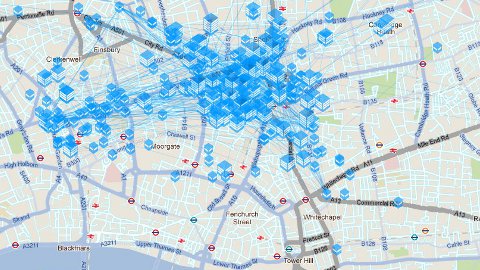
c) One of Alison's advises during my research for speakers for One Stop film Shop, was to look for people that work at the Tech City, since most of the talks we were planning had to do with film and technology. I was not really familiar with the fact that London had its own version of Silicon Valley, let alone that it was located in East London. According to this infographic from MIT Technology Review (n.d.), it turns out that Tech City is one of the largest technology clusters in the world, that expands from Old Street to Stratford, with most of the companies concentrated around Shoreditch (BBC, 2010)

That realisation was particularly interesting due to the act that I feel like I am applying things that I learned from this MA in practice. According to Porter (1998), a cluster is a geographic concentration of companies, suppliers and institutions that specialise in specific sectors, and are competing but also co-operating with each other. It is like a city within a city, a place where cultural products are created and consumed at the same time.

From an academic perspective, Tech City is quite interesting, as far as theories of co-location are concerned. As Comunian and Chapain has stated (2010), through co-location the CCIs create a network that provides networking opportunities, the advantage of geographical proximity that allows workers to check out their competition and interact face-to-face with colleagues from other companies, thus giving a strong sense of belonging to the CCI workers, who connect their creative work with a specific place. It would be really interesting to explore how that particular part of London came to be the centre of technological advances of the capital, and how it adds to the city's marketability in a touristic sense. It is too late to change my dissertation topic now, right?

References:
  • BBC, 2010. Cameron reveals Silicon Valley vision for east London. BBC, [online] 4 November 2010. Available at: http://www.bbc.co.uk/news/uk-england-london-11689437 [Accessed on 8 June 2014].
  • Chapain, C. and Comunian, R., (2010). Enabling and Inhibiting the Creative Economy: The Role of the Local and Regional Dimensions in England. Regional Studies, [online] 44:6, pp. 717-734. Available at: http://dx.doi.org/10.1080/00343400903107728 [Accessed 9 June 2014].
  • MIT Technology Review, n.d.. World Innovation Clusters. [infographic online] Available at:  http://www.technologyreview.com/news/517626/infographic-the-worlds-technology-hubs/ [Accessed 8 June 2014].
  • Porter, M.E. On Competition. Boston: Harvard Business School Press, 1998.

Friday, 30 May 2014

Back in the office..

Source: http://wheninlawschool.tumblr.com/


The last exams of my life are finally over! No time to celebrate though. I have been away from work for the last two weeks, and so I had to catch up. The festival is only two weeks away and there are still lots that need to be done. Unfortunately, the programming part of the festival is more or less over, so now I got assigned different tasks that related to the job that I did before but at the same time offered a better insight into different parts of organising a film festival. It was also interesting to work closely with more people from the team, which keeps on getting bigger and bigger the closer we get to the festival.

So now, for the next weeks, my tasks will be to work along with the Film Coordinator in order to help him arrange print traffic (mostly for the films that I helped securing), find and contact potential hosts for various Q&As, help out with hospitality (for filmmakers whose invitations I handled) and help curate the activities of One Stop Film Shop, a special pop-up space that the festival will be running from 9-15 June with Little White Lies Magazine, one of the UK's most respected film magazines. The shop is located at Old Street Station and will act as a hub for festival guests, cinephiles and Londoners to alight for short conversations and film screenings.


Let's see how this will go...

Friday, 16 May 2014

Locking this year's line-up

Taken from the festival's website

The closer we get to the announcement of this year's festival programme, the more hectic my days in the office are. My last day in the office, before my studying-for-the-exams break, coincided with the day that we were locking the programme and I had to finish all of my tasks before leaving. We had to confirm in about 24 hours all of the "pending" titles, which, unfortunately, were a lot. 

Source: http://www.afluffygirl.com/2013_09_01_archive.html

About 10 titles got cancelled in the last minute, which made me realise that nothing is really certain in this job and that you always need to have a plan B. Maybe it was even an issue of lack of organisation. If we have confirmed more of the films earlier, then we would not have to be so stressed in the last minute. It was quite crazy during the last hours before the announcement and I gladly stayed over for more than 7 hours (which is the amount of hours that I usually work) to help out. It was as stressful as it was exciting; a very good chance to test my ability to work under pressure and manage my time, and, once again, I proved to myself and to my colleagues, that I, somehow, work better under pressure. I tend to be more organised and concentrated, which is a good asset if you seek employment in the cultural and creative industries.

Taken from the festival's website

All's Well That Ends WellIt's so exciting seeing all of your hard work getting out there for the world to enjoy! As far as the programme is concerned, there are some parts that I am really proud of. For instance, the Grits 'n' Gravy line-up looks amazing; Grits 'n' Gravy is a special part of the festival that was presented last year for the first time, and celebrates the films and music from the Deep South of the USA. I worked really hard on this so I am really looking forward to see how it will turn out. Then, there is the special event about Palestinian films, for which I chased all the copies and arranged traffic; the exceptional Palo Alto with James Franco (one of the "Coming of Age" films that we are doing this year, since the festival is also becoming a teenager); Hong Khaou's Lilting, one of the (unfortunately) few, but absolutely mesmerizing LGBT films of this year's line-up; Mistaken for Strangers, a really entertaining documentary about the relationship between the lead singer of National, Matt Berninger, and his brother Tom, the director of the film; and The Golden Dream, by far my favourite from the Mexican Focus that we are co-curating with last year's winner Sebastian Hoffman.

Monday, 12 May 2014

WE MADE IT!


The last couple of days were crazy in the office and it's amazing what coordinated, team effort can do. Half of the money for the EEFF's first crowd funding campaign was raised in the last two days! And just 12 minutes before the end, the campaign reached its goal! Well, that was intense!

Apart from the fact that a strong, cooperative team is key for any cultural business that wishes to survive and prosper, the EEFF's crowd funding campaign is also an apparent example of how increasingly important social media are in modern marketing, especially for small businesses that cannot afford the extremely costly traditional advertising of print, radio and TV. 

Social media marketing refers to the creation of online content that aims to grasp the audience's attention and urge them to share that contact in their social networks (Facebook, Twitter, Linkedin, Google+, Tumblr, Flickr, etc), blogs and websites, thus creating what Jan Kietzmann and Ana Canhoto describe (2013) as "electronic word of mouth". In the last hours of the EEFF crowd funding campaign, tweets and re-tweets were crucial, as they generated this electronic word of mouth which resulted in drawing a lot of attention in the campaign and helping EEFF to reach its goal.


Taken from EEFF's twitter

The value of social media originates on the collective and the individual, instead of the mass (Evans, 2012). Nancy R. Jones (2013) highlights the assets of social media marketing by pointing out:

a) its ability to target large audiences quickly and cost-effectively, and enable branding
b) how it enables direct feedback through interactive procedures such as polls, comments on facebook posts, and Q&As on twitter
c) the exposure that social media offer, bearing in mind that most people in developed countries uses social media today

The EEFF team is heavily using facebook and twitter as its main marketing tools, for all of the reasons above. Also, it is pretty obvious that, because of the festival's financial situation, it is impossible for EEFF to afford a lot of traditional advertising.


The efforts of the EEFF team escalated in the last few hours before the end of the kickstarter campaign. The marketing team was on fire, and anyone else did their best by tweeting about it, sharing the campaign on facebook, and practically forcing their friends, relatives, and former colleagues to share and donate.


Congrats team. Now let's go organise this festival!

References

  • Evans, D., (2012) Social Media Marketing: An Hour a Day. Indianapolis: John Wiley & Sons
  • Jones, N., (2013) Importance of Social Media Marketing Among Small Businesses. Available at: http://www.bizible.com/blog/bid/343058/Importance-of-Social-Media-Marketing-Among-Small-Businesses [Accessed 11 May 2014].
  • Kietzmann, J., Canhoto, A. (2013) Bittersweet! Understanding and Managing Electronic Word of Mouth. Available at: http://beedie.sfu.ca/files/Research/Journal_Articles/Journal_Articles_2013/Bittersweet_Understanding_and_managing_electronic_word_of_mouth.pdf [Accessed 11 May 2014].

Saturday, 26 April 2014

Can I please have this job forever?

Source: http://giphy.com/gifs/gNAfPN8Uzp1kY, taken from 'The Devil Wears Prada' (2006), directed by David Frankel


I begin to realise that working in a warm, friendly and creative environment such as the one of EEFF is probably one of the best things that happened to my short professional career. It is indeed really important to find a job that gives you pleasure, especially if you plan to do this job for a lot of years to come. My parents worked in jobs that they never liked, and I could see how exhausted they were from the endless routine of their jobs that did not give anything back to them apart from a relatively good salary. I am glad that they always pushed me to pursue my dreams, since now I am realising that having a job that fulfils you is crucial. After all, you spend 1/3 of your day working, you might as well do something that you feel like it is worth it. 

Working at EEFF does not feel like a burden to me. Obviously, it can be really stressful some times, mostly because I want to make a good impression through my work, but at the same time I am enjoying it so much that it feels like I am not even working. What saddens me though is that working at film festivals is rarely a stable job. Like most of the jobs in the Cultural and Creative Industries, at least according to Gill's research (2011), it is a project based job that you do for up to 6 months per year (if you are lucky), and then you have to seek other projects for the rest of the year. Some people work here part time, while having another stable job all year through. Most of them though are not that fortunate. The CCIs are ruthless and demanding. And, especially in the film business, based on what we discussed in the office the other day with people that are more experienced than me, if you do not make a big name for yourself (or work in the top organisations in the field like the BBC or the BFI) it is highly unlikely that you will ever make enough money so that you could afford a flat on your own, especially in a city like London. That is why networking is such an essential part of our industries. On the other hand, as I said to my father when he told me that my life is going to be really difficult if I choose to follow this path, I prefer to starve than have a job that makes me miserable.

At this point, a montage of inspirational speeches from movies seems like the key to lighten the mood and regain confidence:


References:

  • Gill, R., 2002. Cool, Creative and Egalitarian? Exploring Gender in Project-Based New Media Work in Euro. Information, Communication & Society, [online] 5:1, pp. 70-89. Available at: http://dx.doi.org/10.1080/13691180110117668 [Accessed 24 April 2014].


Thursday, 17 April 2014

Money makes the world go round


Money cannot buy happiness but it can buy practically everything else. Today EEFF launched its crowd-funding campaign, in order to keep on offering free parallel activities, along with its main programme. A few months ago, the festival became constituted as a non-for-profit Community Interest Company (CIC). CICs, according to the official website of the UK government, are social enterprises that use their surplus for the public good; they reinvest any profits they have in their business instead of taking advantage of it by dispersing it among shareholders.

That, of course, puts limits to what activities the festival is able to organize and what kind of films it can attract. In other words, financial deficiency puts restrictions into EEFF's creativity. However, EEFF wants to stay independent, which is an honourable choice, and for this reason, a crowd-funding campaign seems like a rational venture. It is a smart move, as EEFF takes pride in being a festival for and of the people. Headline sponsors and stakeholders are unnecessary.


Source: http://xmedia.ex.ac.uk/wp/wordpress/what-your-uni-years-will-be-like-a-filmic-narration-through-gifs/, taken from 'Bridesmaids' (2011), directed by Paul Feig

All this brings in mind some of the main issues we discussed in one of my optional modules, Art of Management: Management of Art. According to Justin Lewis 'Art, Culture and Enterprise' (1990, p.5), art is a 'cultural practice' that entails the production of a particular object, which functions 'as a self-conscious, personal, or collective expression of something'. On the other hand, economics is a science which analyses social behaviour 'as a relationship between ends and scarce means which have alternative uses' (Robbins, 1945, p.16). For me, the combination of these two is the essence of what my job and every job in the Cultural and Creative Industries ensues. Even though profit might not always be the purpose, the cultural industries, as all other industries, need an financial basis on which to prosper (Frey, 2003).

Source: http://xomeli.tumblr.com/, taken from 'The Wolf of Wall Street' (2013), directed by Martin Scorsese


What do all of these mean in a practical level? Relentlessly negotiating screening fees and trying alternative deals with sales representatives, venue owners, and so on. Insufficient funds can sometimes lead you to deadlocks. It is true that the commercialization of art can degenerate it, and undermine its value and its mission (Austin and Devin, 2009). However, as Jonathan Swift said 'a wise person should have money in their head, but not in their heart'. And that's EEFF's mentality in a sentence.

References:

  • Austin, R., Devin L., 2009. It Is Okay for Artists to Make Money. No, Really, It's Okay. Harvard Business School: Cambridge.
  • Frey, B., 2003. Arts & Economics: Analysis & cultural policy. Springer Verlag: Berlin.
  • Gov.UK, n.d.. Community Interest Companies. Available at: https://www.gov.uk/government/organisations/office-of-the-regulator-of-community-interest-companies [Accessed 16 April 2014].
  • Kickstarter, 2014. East End Film Festival. Available at: https://www.kickstarter.com/projects/eeff/east-end-film-festival [Accessed 16 April 2014].
  • Lewis, R., 1990. Art culture & enterprise. Routledge: London.
  • Robbins, L., 1945. An Essay on the Nature & Significance of Economic Science. Macmillan and Co: London.

Friday, 14 March 2014

Party time!

As I already said before, EEFF moved its offices recently to 3 Mills Studios, one of the most important film and TV studios in the UK, that have hosted the London Olympic Opening and Closing ceremonies, and provided spaces for filming for movies like Attack the Block (2011), 28 Days Later (2001), Lock, Stock and Two Smoking Barrels (1998), and The Reader (2008), among others. Moreover, lots of film and TV companies are located inside 3 Mills Studios, like Moviescope Magazine, Talent Talks casting agency and London International School of Performing Arts. It is like a small creative cluster of its own.


Source: http://www.moviescopemag.com/featured-editorial/3-mills-studios-appoints-ad-mel-nortcliffe-as-bookings-manager/


In order to celebrate EEFF's addition to the 3 Mills Studio family, they threw a little party at a very fancy, although somehow alternative, bar close to the canal at Hackney Wick, with free drinks and pizza! Perfect opportunity for networking, and also an ideal chance to get closer with the EEFF staff. It seems that most of the people working here are volunteers and they have been added recently in the group. We are a constantly growing team that includes no less than 30 people; maybe even more, I have lost track, it seems like everyday a brand new face pops up!

Source: http://www.bite.ca/bitedaily/2013/12/10-things-i-learned-from-home-alone/, taken from Home Alone 2: Lost in New York (1992), directed by John Hughes

Highlight of the party: the Head of the Programming team and the Director of the festival (aka, my bosses), thanked me for my help and contribution to the team and proposed that I take even more responsibility in the weeks to come, with assisting the curation of some parallel events of the festival, like Grits 'n' Gravy (an all-day-long event with screenings of films from the Southern US, with live music and free Bloody Marys), the Masonic Temple screenings [a two-day event with screenings of films about witchcraft and magic - from classic Italian giallo horror films to contemporary masterpieces like The Prestige (2006) and Pan's Labyrinth (2006)] and a fortnightly film event at Red Gallery. Nothing feels better than positive feedback. Moral boost: check.

Friday, 7 March 2014

Let's get down to business!

First day at work! Well, this is my first job that involves me speaking in a different language, which was not really a problem for me but that does not mean that it was not weird at the beginning. I was greeted by a very welcoming team of people and got introduced to the Head of Programming. The first day was quite enlightening about what my job entails. As a Programming Assistant I will have to look at the programmes of other film festivals that host bold, independent features and check out which of the films hosted there are actually eligible for EEFF. Apart from that, I will have to look at old programmes from specific film festivals and track the work of then first time directors, who are now finishing or have already completed their second features. The research procedure is quite open, so I can use my own resources, knowledge and connections in order to discover films that would fit in EEFF's mentality and aesthetics.

Source: http://developedsociety.wordpress.com/

I will also be responsible for contacting the sales representatives, distributors, directors or producers of each film, so that I will request a screener in order for the Programming Team to watch and review the film, and decide whether or not it is suitable for the festival. What is good about that is that I also get the opportunity to watch films that are not accessible to the public due to lack of distribution and exposure. Plus, the Head of Programming seems to trust my taste in films and encourages me to express my opinion.

Source: http://www.huffingtonpost.com/2013/10/01/signs-its-time-to-quit-your-job_n_4018629.html, taken from Bruce Almighty (2003), directed by Tom Shadyak

Moreover, I even got my own '@eastendfilmfestival.com' email address, and a pass to get in and out of 3 Mills Studio - yes, the offices of EEFF are situated inside 3 Mills Studio! How exciting is that?

Overall, I am very satisfied with the environment and my responsibilities. It's friendly but not relaxed, and even the more time-consuming duties are enjoyable. I personally research for films all day long anyway, and now, as a plus, I get to contact directors and producers with whom I would potentially like to work with in the future. Fingers crossed.

Tuesday, 25 February 2014

Mission accomplised: Interview 'successful'

Well, apparently I was more like Ted Kramer and less like Borat! I just got an email from the Director of East End Film Festival and even though I did not get accepted for the position that I applied for (that of the festival assistant), she proposed a different position that she feels like it fits better to my personality, my qualities and my career goals: that of a Programming Assistant.


Source: http://www.wnff.net/index.php?topic=29065.0, taken from 'Singing in the Rain' (1952), directed by Stanley Donen and Gene Kelly

I feel like I wanna go out into the street and start dancing like Gene Kelly in 1952's Singin in the Rain (the weather will totally help to recreate the original environment of the movie, as it is pouring outside). Even though after the interview was over I felt quite confident, I never expected that I will get a job that is even better than the one that I applied for!

Programming a film festival is the equivalent of curating an art exhibition. You are responsible for researching for films that fit with the ethos of the festival, putting the festival's programme together in such a way so as to create an exciting, entertaining but also educational and intriguing experience for the festival's audience. It's the heart of every film festival and an essential part of film culture. 

Each festival has its own aesthetics and deals with specific types of films or themes. Festival programmers are responsible for staying true to the festival's ideals and promote its ideology. Moreover, as Julian Stringer mentions in his book 'Neither One Thing nor the Other: Blockbusters at Film Festivals' (2003), film curatorship is also influenced by (and it also affects, respectively) financial strategies that occur when various deals take place between the industry and the festival.


Sourcehttp://hackneycitizen.co.uk/2013/03/25/east-end-film-festival-2013/

Now, regarding East End Film Festival, it was founded at the beginning of the 21st century and it is one of the biggest film festivals in the country. According to its website, it is held annually in London where it attracts more than 30,000 film lovers per year. It showcases novel and daring films from all over the world, but mostly focuses in the work of first or second time directors. It also has a vast variety of partnerships and sponsors that include the British Film Institute, Amnesty International, Film London, The Barbican, 3 Mills Studios and Shooting People. What is even more impressive is its list of patrons, that includes the Academy Award winner and film legend Danny Boyle, director of 'Trainspotting' (1996) and 'Slumdog Millionaire' (2008), the brilliant Joe Wright, director of 'Atonement' (2007) and 'Hanna' (2011), as well as the renowed composer Michael Nyman,nominated for three Golden Globes for his work in 'The Piano' (1993), 'Gattaca' (1997) and 'The End of the Affair' (1999).

Next Wednesday is the day that I will officially become a member of the East End Film Festival team. I cannot wait!


References:

  • East End Film Festival, n.d.. About us. Available at http://www.eastendfilmfestival.com/about-us [Accessed 23 February 2014]
  • East End Film Festival, n.d.. East End Film Festival partners and supporters. Available at http://www.eastendfilmfestival.com/sponsors [Accessed 23 February 2014]
  • East End Film Festival, n.d.. Our Patrons. Available at http://www.eastendfilmfestival.com/patrons [Accessed 23 February 2014]
  • Stringer, J., (2003). Neither One Thing nor the Other: Blockbusters at Film Festivals. In J. Stringer, ed. 2003. Movie Blockbusters. London/New York: Routledge. pp. 202–213.


Friday, 21 February 2014

First Interview

After 9 unsuccessful applications (for which I either got a negative response or none at all), I finally got an interview invitation from the East End Film Festival. This is beyond exciting but, I will not lie, it also makes me feel a little tense. I have not been interviewed for a job for a very long time, and I am afraid that I might be a little rusty. Thankfully, the Careers Service of King's College have been quite helpful. I went there to get some advice the day after I received the positive reply from the East End Film Festival (which, by the way, was my second choice for an internship, as I mentioned in my Internship Plan) and the lady that I met reminded me of the basic dos and don'ts:

1) Learn as much as you can about the company. It always helps if you look interested in their works and know what they have been doing in the past. That way they feel that you have a personal connection with their organisation already.
2) Don't hide your weaknesses but make them look like they can turn into assets for the company. For me that is the most difficult part as I always found the question 'What is your weakness?' ridiculous. The obvious answer is 'I am a perfectionist' but if you really want to stand out you need to be more creative.
3) Be relaxed and confident, but do not exaggerate. Do not act like you own the place but try and show that you really want to work there and that you have everything it takes.

My interview is in 4 days, which gives me a lot of time to prepare. For now, I am just looking at cinematic examples of job interviews. I will try to avoid looking like this ...


... and be more like this ...


Saturday, 1 February 2014

Applications mode on

When the very stressful weeks of essay writing (for my optional module "Art of Management: Management of Art") got over, and the essay was successfully submitted, it seemed like the right time to resume my quest for an internship. After visiting the Careers Centre, I earned valuable advice on how to write my CV and covering letter, and I incorporated their corrections and suggestions in the latest version of my CV. I, then, started communicating with the companies that were at the top of my list

Source: http://gifs-for-the-masses.tumblr.com/post/20887519814, taken from 'Mulan' (1998), directed by Tony Bancroft and Barry Cook

My first attempt was fruitless, as, after all, it seems that Sundance Film Festival London is not looking for interns. However, that does not mean that I cannot apply for a position as a volunteer, which will at least fulfil my goal of enhancing my CV by adding experience gained in the UK. As for the rest of the companies (DNA, See-Saw, Recorder Picture Company), none of them has replied yet, which either means that they rejected me or that they are taking their time. I choose to keep positive and believe the latter; after all, it has been just 10 days since I emailed all of them. I guess I should be more patient.

Source: http://stuffpoint.com/harry-potter/image/52955/i-dont-like-to-be-kept-waiting-picture/, taken from 'Harry Potter and the Deathly Hallows: Part 2', directed by David Yates

From now on, I will open up my research to more possibilities. My essay for "Art of Management" was focusing on the problems that the film distribution industry is facing nowadays, in an era of digitisation and financial crisis. During my research on the subject, I realised that distribution is an aspect of film that is also quite intriguing. It might not be a bad idea to explore my options in that field as well. I randomly came across a distribution company named Peccadillo Pictures, which is the main distributor of LGBT movies in the UK, and has actually distributed some of my most favourite queer films of all time. I was lucky enough to find out that they are currently looking for interns. My next move will be to get in touch with them, and try and find even more distribution companies, in order to broaden my horizons as well as my opportunities for an internship.